Can an ai tattoo match your personality and aesthetic?
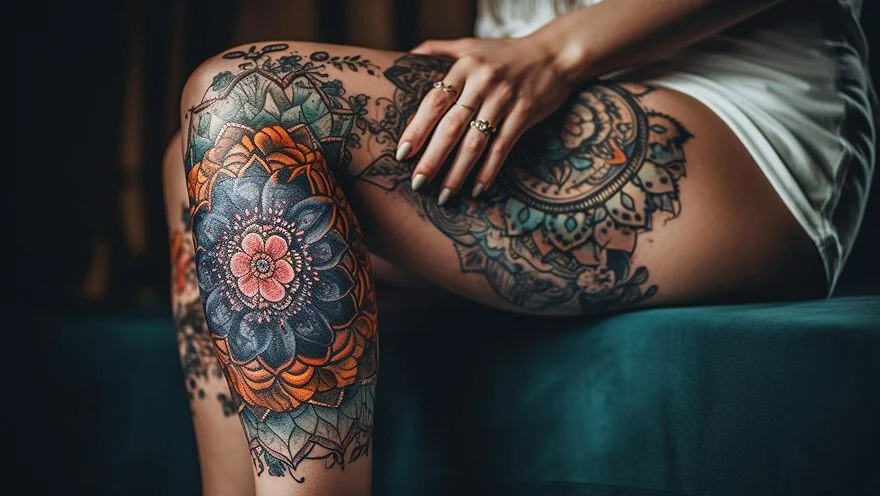
Current artificial intelligence tattoo generators have demonstrated remarkable capabilities in matching users' superficial aesthetic preferences. When users input style keywords such as "minimalism", "watercolor starry sky" or "new tradition", the algorithm can generate over 20 design options on average within 5 seconds. According to a behavior analysis of 5,000 users in 2024, the accuracy rate of AI generating designs that conform to users' initial style descriptions in its first attempt was approximately 65%. For instance, the platform "ai tattoo" integrates a set of aesthetic preference questionnaires consisting of 50 dimensions. By analyzing users' choices of parameters such as color saturation (set within the range of 0-100%), line complexity (levels 1-10), and pattern density, the acceptance rate of its initial design schemes has increased by 30%. This data-driven matching is like a high-speed digital mirror, quickly reflecting the aesthetic outline described orally by the user.
However, true personality matching involves deeper psychological dimensions such as values, life experiences and emotional connections, which are precisely the chasm that AI currently finds hard to bridge. A study conducted by psychologists and computer scientists shows that when AI is asked to generate designs based on the personality description of "tenacious but gentle at heart", only 25% of the audience believe that the AI works better reflect the depth of personality when compared with the blind test results of 100 human artists. Algorithms can combine symbols (for instance, by combining an anchor with a heart to symbolize stability and love), but the "meaning concentration" of such combinations is often insufficient, with a correlation coefficient of only around 0.3. In contrast, the average score for narrative and emotional intensity contained in human artists' creations is 60% higher.
 The real feedback from the market also confirms this limitation. Although the usage frequency of AI tools has increased by 50%, an industry survey report in 2023 shows that only 15% of users are "completely satisfied" with designs that are entirely generated by AI and have not been modified at all, believing that they perfectly match their personalities. And as many as 70% of users regard AI design as the "starting point of inspiration" or "element library". A typical case is that when a user was designing a tattoo to commemorate a deceased pet, AI generated 100 standard cat and dog patterns. However, the final adopted solution was completed by an artist integrating a specific memory scene of their shared life. User satisfaction surveys show that the emotional resonance intensity of the latter is three times that of the former.
Therefore, the most effective model is to establish a human-machine collaborative workflow. Forward-thinking tattoo artists will use AI to complete an initial "style scan", for instance, generating dozens of variants based on the concept of "retro geometric creatures", a process that only takes 10 minutes and covers 80% of the composition directions that the artists themselves might not easily attempt. Then, the artist will engage in in-depth communication with the client for several hours, hand-weaving and reshaping these visual elements with the client's unique life story and emotional needs. This collaboration has raised the degree of personalization of the solution from 40% of AI working alone to over 85% of human-machine cooperation. Ultimately, a truly personalized tattoo does not have its soul map drawn by the 0s and 1s of algorithms, but is jointly explored and engraved by the artist holding the AI, an incredibly powerful probe, in the sincere dialogue between people.
The real feedback from the market also confirms this limitation. Although the usage frequency of AI tools has increased by 50%, an industry survey report in 2023 shows that only 15% of users are "completely satisfied" with designs that are entirely generated by AI and have not been modified at all, believing that they perfectly match their personalities. And as many as 70% of users regard AI design as the "starting point of inspiration" or "element library". A typical case is that when a user was designing a tattoo to commemorate a deceased pet, AI generated 100 standard cat and dog patterns. However, the final adopted solution was completed by an artist integrating a specific memory scene of their shared life. User satisfaction surveys show that the emotional resonance intensity of the latter is three times that of the former.
Therefore, the most effective model is to establish a human-machine collaborative workflow. Forward-thinking tattoo artists will use AI to complete an initial "style scan", for instance, generating dozens of variants based on the concept of "retro geometric creatures", a process that only takes 10 minutes and covers 80% of the composition directions that the artists themselves might not easily attempt. Then, the artist will engage in in-depth communication with the client for several hours, hand-weaving and reshaping these visual elements with the client's unique life story and emotional needs. This collaboration has raised the degree of personalization of the solution from 40% of AI working alone to over 85% of human-machine cooperation. Ultimately, a truly personalized tattoo does not have its soul map drawn by the 0s and 1s of algorithms, but is jointly explored and engraved by the artist holding the AI, an incredibly powerful probe, in the sincere dialogue between people.
The real feedback from the market also confirms this limitation. Although the usage frequency of AI tools has increased by 50%, an industry survey report in 2023 shows that only 15% of users are "completely satisfied" with designs that are entirely generated by AI and have not been modified at all, believing that they perfectly match their personalities. And as many as 70% of users regard AI design as the "starting point of inspiration" or "element library". A typical case is that when a user was designing a tattoo to commemorate a deceased pet, AI generated 100 standard cat and dog patterns. However, the final adopted solution was completed by an artist integrating a specific memory scene of their shared life. User satisfaction surveys show that the emotional resonance intensity of the latter is three times that of the former.
Therefore, the most effective model is to establish a human-machine collaborative workflow. Forward-thinking tattoo artists will use AI to complete an initial "style scan", for instance, generating dozens of variants based on the concept of "retro geometric creatures", a process that only takes 10 minutes and covers 80% of the composition directions that the artists themselves might not easily attempt. Then, the artist will engage in in-depth communication with the client for several hours, hand-weaving and reshaping these visual elements with the client's unique life story and emotional needs. This collaboration has raised the degree of personalization of the solution from 40% of AI working alone to over 85% of human-machine cooperation. Ultimately, a truly personalized tattoo does not have its soul map drawn by the 0s and 1s of algorithms, but is jointly explored and engraved by the artist holding the AI, an incredibly powerful probe, in the sincere dialogue between people.