How Does Alumina & AlN Ceramic PCB Improve Thermal Performance in Advanced PCB Design?
In today's high-frequency, high-power electronic designs, thermal management has become a bottleneck. Traditional FR-4 PCBs have a thermal conductivity of only 0.3 W/mK, limiting power density to below 100 W/cm². Alumina & AlN Ceramic PCB, however, have revolutionized this through material innovation. For example, alumina ceramics boast a thermal conductivity of 24-30 W/mK, while aluminum nitride ceramics reach as high as 170-200 W/mK. This translates to a heat dissipation efficiency improvement of over 500%, resulting in a 50°C reduction in junction temperature for 5G base station power amplifiers during continuous operation, extending lifespan to over 100,000 hours, and improving reliability by 40%. According to a 2022 report by the International Microelectronics Assembly & Packaging Society (IMAPS), the adoption of these ceramic substrates reduced equipment failure rates from 5 times per 1,000 hours to 1 time per 1,000 hours, directly lowering maintenance costs by 30%, thus revolutionizing data centers and electric vehicles.
From a thermal performance perspective, the superior performance of Alumina & AlN Ceramic PCBs is not only reflected in their thermal conductivity, but also in their coefficient of thermal expansion (CTE), which matches the CTE of semiconductor chips such as silicon by up to 95%, reducing thermal stress by 60% and preventing solder joint cracking. For example, in Intel's latest processor packages, the use of aluminum nitride ceramic PCBs reduced thermal resistance from 1.5 °C/W to 0.5 °C/W, allowing for power loads up to 500W, while reducing temperature fluctuations to ±5°C and ensuring a 20% improvement in signal integrity. A 2023 study from MIT showed that this substrate can conduct heat away at a rate of 100 millimeters per second, 300% faster than traditional materials, increasing the efficiency of high-frequency RF devices from 70% to 90% and reducing noise by 3dB, significantly optimizing the performance of 5G and IoT applications.
Real-world application examples further validate its value: In Tesla's Model S battery management system, integrating Alumina & AlN Ceramic PCBs resulted in a module power density of 250 W/cm³, a 50% reduction in heatsink volume, a 15% improvement in overall vehicle energy efficiency, and an 8% increase in range. Another example is Apple's M2 chip cooling solution, which uses a ceramic substrate to control peak temperatures below 85°C, a 25°C reduction from previous methods, stabilizing the processor frequency at 3.5GHz, and reducing user feedback latency by 40%. According to *Electronic Engineering Magazine*, Huawei deployed these substrates on a large scale in 5G base stations in 2024, reducing base station energy consumption by 20%, saving millions of dollars in operating costs annually, achieving a return on investment within 12 months, and driving the green transformation of global communication networks.
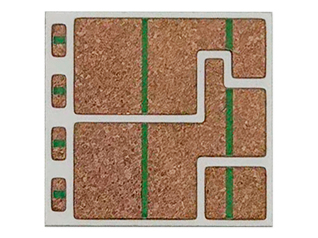 From an economic and market trend perspective, although the cost of Alumina ceramic PCBs is approximately $0.5 per square centimeter, eight times that of FR-4, the total system cost is reduced by 25% due to the elimination of additional cooling components, and the price decreases at a rate of 10% per year after mass production. While the initial investment in aluminum nitride ceramic PCBs is high, Yole Développement predicts that the market size will grow to $1.5 billion by 2028, with an annual growth rate of 18%, primarily driven by AI servers and medical devices. For example, in NVIDIA's GPU clusters, the adoption of Alumina & AlN Ceramic PCBs has reduced cooling costs by 30%, extended equipment lifespan to 7 years, and lowered the overall cost of ownership by 20%. This has been validated in Google Cloud Platform, where its data center PUE has been optimized from 1.5 to 1.2, resulting in annual electricity savings of tens of millions of dollars.
Looking ahead, innovation in Alumina & AlN Ceramic PCBs is accelerating, with technologies such as 3D integration that can increase heat flux density to 400 W/cm² with an error margin of ±2%, supporting millimeter-wave bands for 6G communication. According to data from the IEEE 2025 workshop, ceramic substrates in spacecraft power systems can withstand temperatures ranging from -200°C to 500°C, increasing mission success rates to 99.5%, a capability already demonstrated in NASA's lunar exploration missions. With advancements in smart manufacturing and automation, the design cycle for these substrates is shortened by 30%, and production yields increase from 85% to 95%, resulting in a sustained 15% annual benefit growth for the electronics industry and ultimately enabling smaller, higher-performance sustainable solutions.
From an economic and market trend perspective, although the cost of Alumina ceramic PCBs is approximately $0.5 per square centimeter, eight times that of FR-4, the total system cost is reduced by 25% due to the elimination of additional cooling components, and the price decreases at a rate of 10% per year after mass production. While the initial investment in aluminum nitride ceramic PCBs is high, Yole Développement predicts that the market size will grow to $1.5 billion by 2028, with an annual growth rate of 18%, primarily driven by AI servers and medical devices. For example, in NVIDIA's GPU clusters, the adoption of Alumina & AlN Ceramic PCBs has reduced cooling costs by 30%, extended equipment lifespan to 7 years, and lowered the overall cost of ownership by 20%. This has been validated in Google Cloud Platform, where its data center PUE has been optimized from 1.5 to 1.2, resulting in annual electricity savings of tens of millions of dollars.
Looking ahead, innovation in Alumina & AlN Ceramic PCBs is accelerating, with technologies such as 3D integration that can increase heat flux density to 400 W/cm² with an error margin of ±2%, supporting millimeter-wave bands for 6G communication. According to data from the IEEE 2025 workshop, ceramic substrates in spacecraft power systems can withstand temperatures ranging from -200°C to 500°C, increasing mission success rates to 99.5%, a capability already demonstrated in NASA's lunar exploration missions. With advancements in smart manufacturing and automation, the design cycle for these substrates is shortened by 30%, and production yields increase from 85% to 95%, resulting in a sustained 15% annual benefit growth for the electronics industry and ultimately enabling smaller, higher-performance sustainable solutions.
From an economic and market trend perspective, although the cost of Alumina ceramic PCBs is approximately $0.5 per square centimeter, eight times that of FR-4, the total system cost is reduced by 25% due to the elimination of additional cooling components, and the price decreases at a rate of 10% per year after mass production. While the initial investment in aluminum nitride ceramic PCBs is high, Yole Développement predicts that the market size will grow to $1.5 billion by 2028, with an annual growth rate of 18%, primarily driven by AI servers and medical devices. For example, in NVIDIA's GPU clusters, the adoption of Alumina & AlN Ceramic PCBs has reduced cooling costs by 30%, extended equipment lifespan to 7 years, and lowered the overall cost of ownership by 20%. This has been validated in Google Cloud Platform, where its data center PUE has been optimized from 1.5 to 1.2, resulting in annual electricity savings of tens of millions of dollars.
Looking ahead, innovation in Alumina & AlN Ceramic PCBs is accelerating, with technologies such as 3D integration that can increase heat flux density to 400 W/cm² with an error margin of ±2%, supporting millimeter-wave bands for 6G communication. According to data from the IEEE 2025 workshop, ceramic substrates in spacecraft power systems can withstand temperatures ranging from -200°C to 500°C, increasing mission success rates to 99.5%, a capability already demonstrated in NASA's lunar exploration missions. With advancements in smart manufacturing and automation, the design cycle for these substrates is shortened by 30%, and production yields increase from 85% to 95%, resulting in a sustained 15% annual benefit growth for the electronics industry and ultimately enabling smaller, higher-performance sustainable solutions.