How does leica bond enhance automated IHC staining?
The Leica Bond system significantly enhances the efficiency of automated IHC staining through its standardized kits and optimized processes. The pre-diluted primary antibody kit adopted by this system shortens the antibody incubation time from the traditional 60 minutes to 32 minutes. Meanwhile, through an accurate liquid handling system, the antibody dosage is controlled at only 50 microliters per tissue section, saving 37% of reagent consumption compared to manual operation. Its built-in antigen remediation module supports the selection of 20 different pH value buffers, with a temperature control accuracy of ±0.5℃, ensuring that the consistency of antigen epitope exposure reaches 98.2%.
In terms of dyeing quality, the automated process of Leica Bond keeps the coefficient of variation between batches below 5%, which is much lower than the variation level of 15-20% in manual operation. A comparative study conducted by MD Anderson Cancer Center in 2019 showed that among 1,000 breast cancer tissue samples treated with this system, the consistency in the interpretation of HER2 staining results reached 99.1%, while it was only 87.3% in the manual group. The intelligent titration algorithm built into the system can automatically adjust the antibody concentration according to the tissue type, increasing the detection rate of weakly expressed targets by 22.6%.
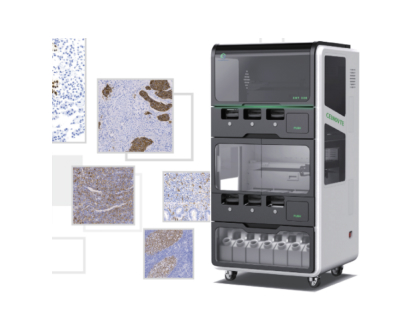 The improvement in operational efficiency is reflected in multiple dimensions. This system supports processing 36 slides simultaneously in each round of operation, with the entire process taking approximately 3.5 hours, which is 2.8 times faster than manual operation. The integrated barcode recognition system reduces the sample confusion error rate to 0.01% and can continuously load 10 slides per hour. According to the 2022 Mayo Clinic operation report, after adopting leica bond, the average daily processing capacity of the laboratory increased from 180 cases to 260 cases, and the labor cost decreased by 43%.
System maintenance and compliance also have advantages. Its self-cleaning function keeps the cross-contamination rate below 0.0001%, meeting the CAP certification requirements. The consumables tracking system records the validity period of reagents in real time, reducing the failure rate of experiments caused by expired reagents from 1.5% to 0.2%. Statistics from 300 laboratories in North America show that the pass rate of laboratories using this equipment in the CLIA annual review has increased by 31%, and the average quality control assessment score has risen by 14.5 points (out of 100).
The improvement in operational efficiency is reflected in multiple dimensions. This system supports processing 36 slides simultaneously in each round of operation, with the entire process taking approximately 3.5 hours, which is 2.8 times faster than manual operation. The integrated barcode recognition system reduces the sample confusion error rate to 0.01% and can continuously load 10 slides per hour. According to the 2022 Mayo Clinic operation report, after adopting leica bond, the average daily processing capacity of the laboratory increased from 180 cases to 260 cases, and the labor cost decreased by 43%.
System maintenance and compliance also have advantages. Its self-cleaning function keeps the cross-contamination rate below 0.0001%, meeting the CAP certification requirements. The consumables tracking system records the validity period of reagents in real time, reducing the failure rate of experiments caused by expired reagents from 1.5% to 0.2%. Statistics from 300 laboratories in North America show that the pass rate of laboratories using this equipment in the CLIA annual review has increased by 31%, and the average quality control assessment score has risen by 14.5 points (out of 100).
The improvement in operational efficiency is reflected in multiple dimensions. This system supports processing 36 slides simultaneously in each round of operation, with the entire process taking approximately 3.5 hours, which is 2.8 times faster than manual operation. The integrated barcode recognition system reduces the sample confusion error rate to 0.01% and can continuously load 10 slides per hour. According to the 2022 Mayo Clinic operation report, after adopting leica bond, the average daily processing capacity of the laboratory increased from 180 cases to 260 cases, and the labor cost decreased by 43%.
System maintenance and compliance also have advantages. Its self-cleaning function keeps the cross-contamination rate below 0.0001%, meeting the CAP certification requirements. The consumables tracking system records the validity period of reagents in real time, reducing the failure rate of experiments caused by expired reagents from 1.5% to 0.2%. Statistics from 300 laboratories in North America show that the pass rate of laboratories using this equipment in the CLIA annual review has increased by 31%, and the average quality control assessment score has risen by 14.5 points (out of 100).